Why Stream Crossings Require Caution
During many treks, especially in mountainous or forest regions, you may encounter streams or small rivers along the trail. These water crossings are often beautiful parts of the journey, but they can also be tricky if approached carelessly.
Even shallow streams can have slippery rocks, uneven riverbeds, or stronger currents than they appear from a distance. Moving water reduces stability and can make balancing difficult while stepping across stones or wading through the stream.
For beginners, stream crossings can feel intimidating at first. However, with the right techniques and awareness, they can be handled safely and confidently.
Learning how to cross streams properly helps reduce the risk of slipping, losing balance, or getting injured during the trek.
Observe the Stream Before Crossing
Before stepping into a stream, take a moment to observe the surroundings and understand the conditions. Rushing into a crossing without evaluating the situation can increase the chances of slipping or misjudging the water depth.
Look for areas where the stream appears calmer and wider. In many cases, wider sections of a stream have slower water flow compared to narrow channels where the current may be stronger.
Also check for stable stepping points such as large rocks, gravel beds, or natural stepping stones that may help you cross more easily.
Spending a few moments assessing the safest route can make the crossing much smoother.
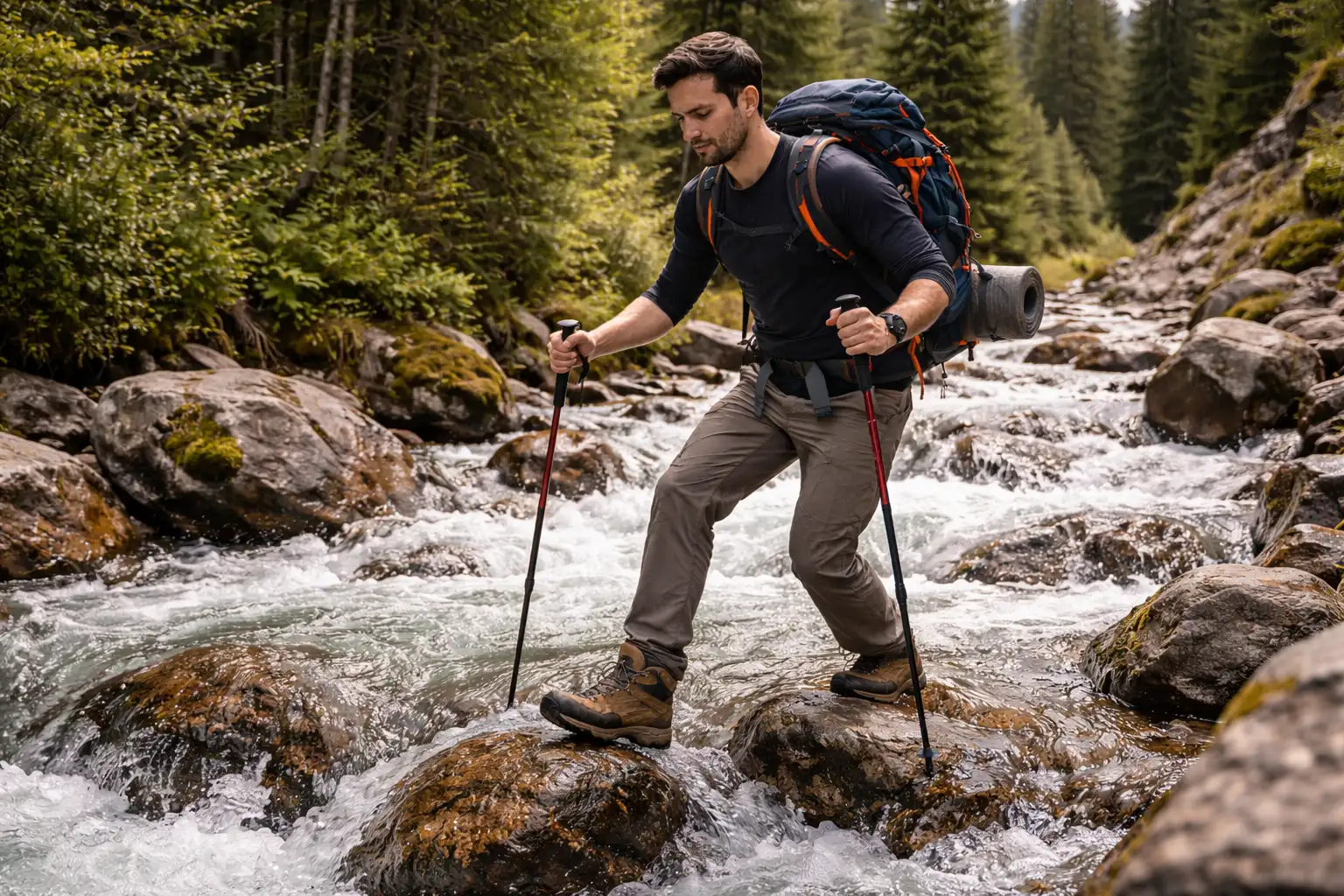
Carefully observing the stream helps identify the safest place to cross.
Use Trekking Poles for Balance
Trekking poles can be extremely helpful when crossing streams. They provide extra points of contact with the ground and help maintain balance on slippery or uneven surfaces.
When stepping into the water, place the poles firmly on the streambed before moving your feet. This helps you test the stability of the ground and maintain better control.
Even a simple walking stick found along the trail can provide additional support if trekking poles are not available.
Using poles reduces the chances of slipping and improves confidence while navigating water crossings.
Keep Three Points of Contact
One of the safest techniques when crossing streams is maintaining three points of contact with the ground at all times. This means that either both feet and one pole or one foot and two poles remain stable while moving.
Avoid taking large or rushed steps across rocks or slippery surfaces. Instead, move slowly and place each step carefully.
Testing each rock before fully shifting your weight helps ensure that it is stable and not loose or slippery.
This steady and controlled movement greatly reduces the risk of losing balance.
Face Upstream When Crossing
If you need to step directly into the water, it is often safer to face slightly upstream while crossing. This allows you to lean gently into the current and maintain better balance.
Facing upstream also helps you see the direction of the flowing water and adjust your footing accordingly.
Keep your knees slightly bent and move slowly while maintaining steady footing on the streambed.
This technique helps your body remain stable against the movement of the water.
Loosen Your Backpack Straps
When crossing streams, it is a good idea to slightly loosen the chest strap or waist belt of your backpack. This simple precaution can help you remove the backpack quickly if you lose balance and fall into the water.
A heavy backpack can make it harder to regain balance if you slip. Keeping straps slightly loose provides more flexibility and safety during the crossing.
However, make sure the backpack is still secure enough to avoid shifting while walking.
Avoid Crossing During Strong Water Flow
During heavy rainfall or snowmelt seasons, streams can become much stronger and deeper than usual. Fast-moving water significantly increases the risk of losing balance.
If the water appears too deep or the current seems strong, it is often safer to search for an alternate crossing point or wait until the water flow reduces.
In group treks, experienced guides usually assess water crossings carefully before allowing the group to proceed.
Never hesitate to prioritize safety over speed when dealing with stream crossings.
Cross One Person at a Time
When trekking in groups, it is usually safer for individuals to cross streams one at a time. This prevents overcrowding on unstable rocks or narrow crossing points.
Other trekkers can provide guidance or support from the sides while the person crossing focuses on maintaining balance.
This approach ensures that each person has enough space and stability while navigating the stream.
Mototrek Tip
Always take your time when crossing streams during a trek. Move slowly, test your footing, and use trekking poles whenever possible. A cautious approach ensures both safety and confidence on the trail.