Why Choosing the Right Trekking Shoes Matters
Your trekking shoes are one of the most important pieces of gear you will carry on a trek. Unlike regular walks or casual hikes, trekking often involves rocky terrain, uneven paths, steep climbs, slippery trails, and long hours of walking.
Wearing the wrong footwear can quickly turn a great trek into an uncomfortable experience. Poor grip can cause slips, inadequate support can strain your ankles, and uncomfortable shoes can lead to blisters or fatigue during long hikes.
On the other hand, the right pair of trekking shoes can make a huge difference. Good trekking shoes provide stability, protection, and comfort while walking on challenging trails. They allow you to move confidently on rocks, mud, and steep slopes without constantly worrying about slipping or losing balance.
Choosing trekking shoes carefully is therefore an important step in preparing for any trekking adventure.
Understand the Type of Trek You Are Planning
Different trekking routes require different types of footwear. Before buying trekking shoes, think about the type of treks you usually plan to do.
- Easy day treks on well-defined trails
- Moderate hikes with rocky or uneven terrain
- Long mountain treks with steep climbs
- Monsoon treks with muddy and slippery paths
- High-altitude treks with cold conditions
For beginner-friendly treks, lightweight hiking shoes may be sufficient. However, more demanding treks usually require sturdier trekking shoes with better grip and ankle support.
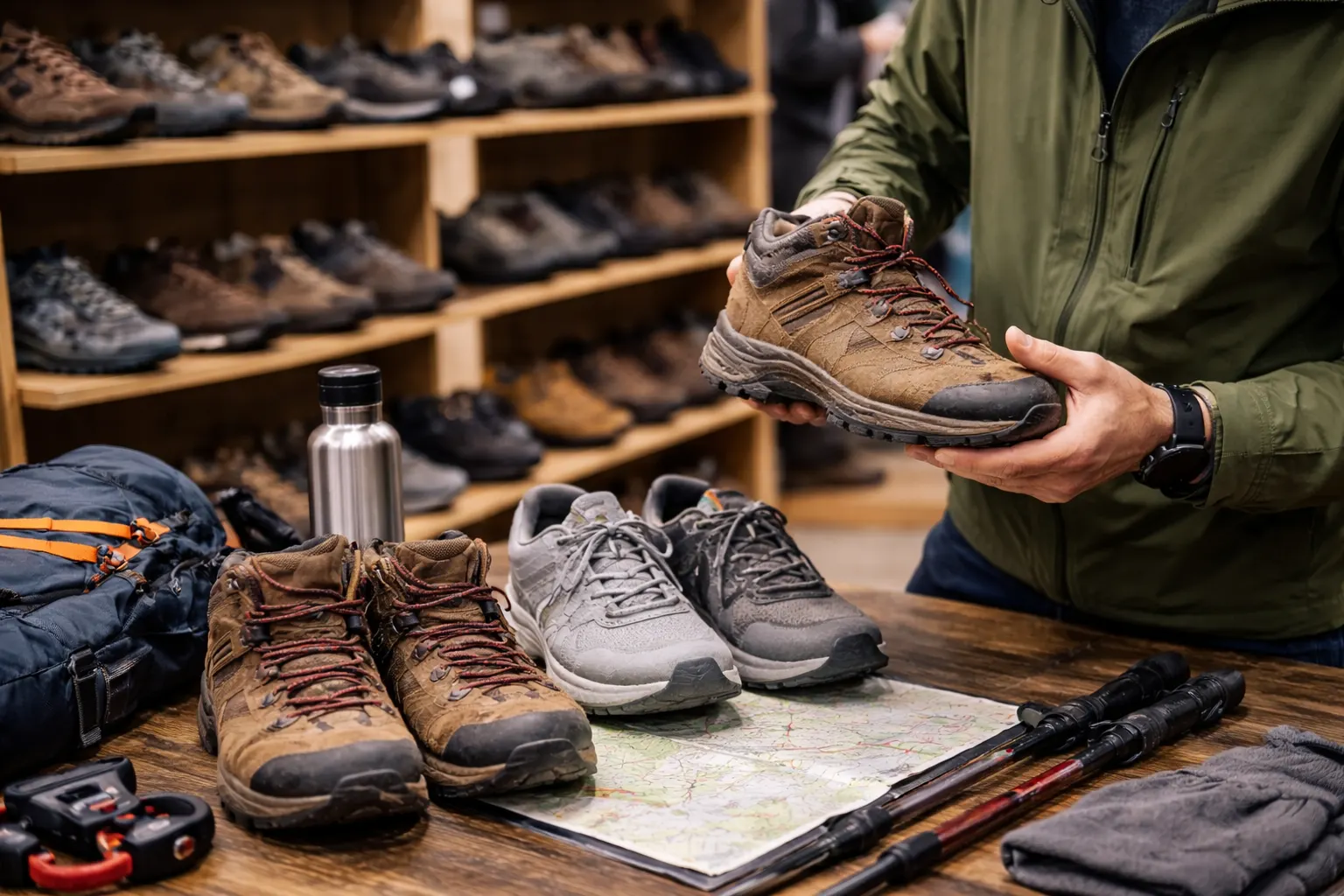
Good trekking shoes provide grip, support, and comfort on rough trails.
Look for Strong Grip and Traction
Grip is one of the most important features of trekking shoes. Trails often include loose soil, wet rocks, gravel, or muddy sections where slipping can be dangerous.
Trekking shoes are designed with specialized rubber soles that provide better traction compared to regular sports shoes. Deep tread patterns on the sole help maintain grip on uneven surfaces and prevent accidental slips.
When selecting trekking shoes, check the sole design carefully. Shoes with aggressive tread patterns usually perform better on rugged trails and slippery terrain.
Reliable grip allows you to walk with confidence even on challenging sections of the trail.
Consider Ankle Support
Uneven trails can place a lot of pressure on your ankles, especially when carrying a backpack. Trekking shoes with proper ankle support help stabilize your feet and reduce the risk of twisting your ankle.
There are generally two main types of trekking shoes:
Low-cut trekking shoes are lighter and more flexible. They are suitable for easy treks and well-maintained trails.
Mid or high-cut trekking shoes provide better ankle support and are usually preferred for rocky, steep, or long-distance treks.
If you are new to trekking or planning challenging routes, shoes with ankle support can offer additional safety and comfort.
Focus on Comfort and Proper Fit
Even the best trekking shoes will not help if they do not fit properly. Comfort should always be one of the top priorities when choosing footwear for trekking.
Your shoes should fit snugly without feeling tight. There should be enough room near the toes so they do not press against the front of the shoe during downhill sections.
It is also a good idea to try trekking shoes while wearing the socks you plan to use during the trek. This helps ensure the fit remains comfortable during long walks.
Walking around the store or testing the shoes for a few minutes can also help you understand whether they feel natural and supportive.
Check Breathability and Weather Protection
Weather conditions can greatly influence your trekking experience. Shoes with breathable materials help keep your feet comfortable during long hikes and prevent excessive sweating.
For rainy or monsoon treks, some trekkers prefer waterproof trekking shoes that keep feet dry during wet conditions. However, waterproof shoes may sometimes feel warmer in hot climates.
Choosing the right balance between breathability and water resistance depends on the climate and terrain where you usually trek.
Comfortable feet make a huge difference during long hikes, so selecting the right material is an important consideration.
Break In Your Shoes Before the Trek
New trekking shoes should never be used for the first time on a long trek. Wearing brand-new shoes without breaking them in can cause discomfort and blisters.
Instead, use your trekking shoes during short walks or practice hikes before your actual trek. This allows the material to adjust to your feet and helps you identify any pressure points early.
Breaking in your shoes gradually ensures that they feel comfortable and supportive during longer adventures.
Taking this simple step can prevent many common trekking problems.
Mototrek Tip
Your trekking shoes should feel comfortable from the start. Never choose shoes that feel tight or uncomfortable thinking they will adjust later. A well-fitted pair of trekking shoes can make your entire trekking experience safer and more enjoyable.