What Is a Night Trek?
A night trek is exactly what it sounds like — trekking through trails after sunset or during the late hours of the night, often with the goal of reaching the summit before sunrise. Instead of hiking under bright daylight, trekkers move through the quiet darkness of forests, hills, and mountain trails using headlamps or flashlights.
Night treks have become very popular among adventure enthusiasts because they offer a completely different experience compared to regular daytime treks. The trails feel quieter, the temperatures are usually cooler, and the entire journey often feels more mysterious and exciting.
For many trekkers, the highlight of a night trek is reaching the top just in time to watch the sunrise slowly light up the mountains and valleys. That moment, after hours of walking through the dark, often becomes one of the most unforgettable parts of the adventure.
However, night trekking also requires a little more preparation and awareness than regular trekking. With the right planning and safety precautions, it can be an incredible experience for both beginners and experienced trekkers.
Why Trekkers Love Night Treks
Night treks offer a unique atmosphere that daytime treks simply cannot replicate. The environment feels calmer, quieter, and sometimes even magical.
- Cooler temperatures make trekking more comfortable
- Trails are usually less crowded
- The silence of nature feels more intense at night
- You get to experience beautiful sunrise views from the summit
- The entire trek feels like a small adventure under the stars
For many trekkers, walking under a sky full of stars while the rest of the world sleeps creates a special connection with nature. The darkness sharpens your senses, making every sound and movement around you feel more vivid.
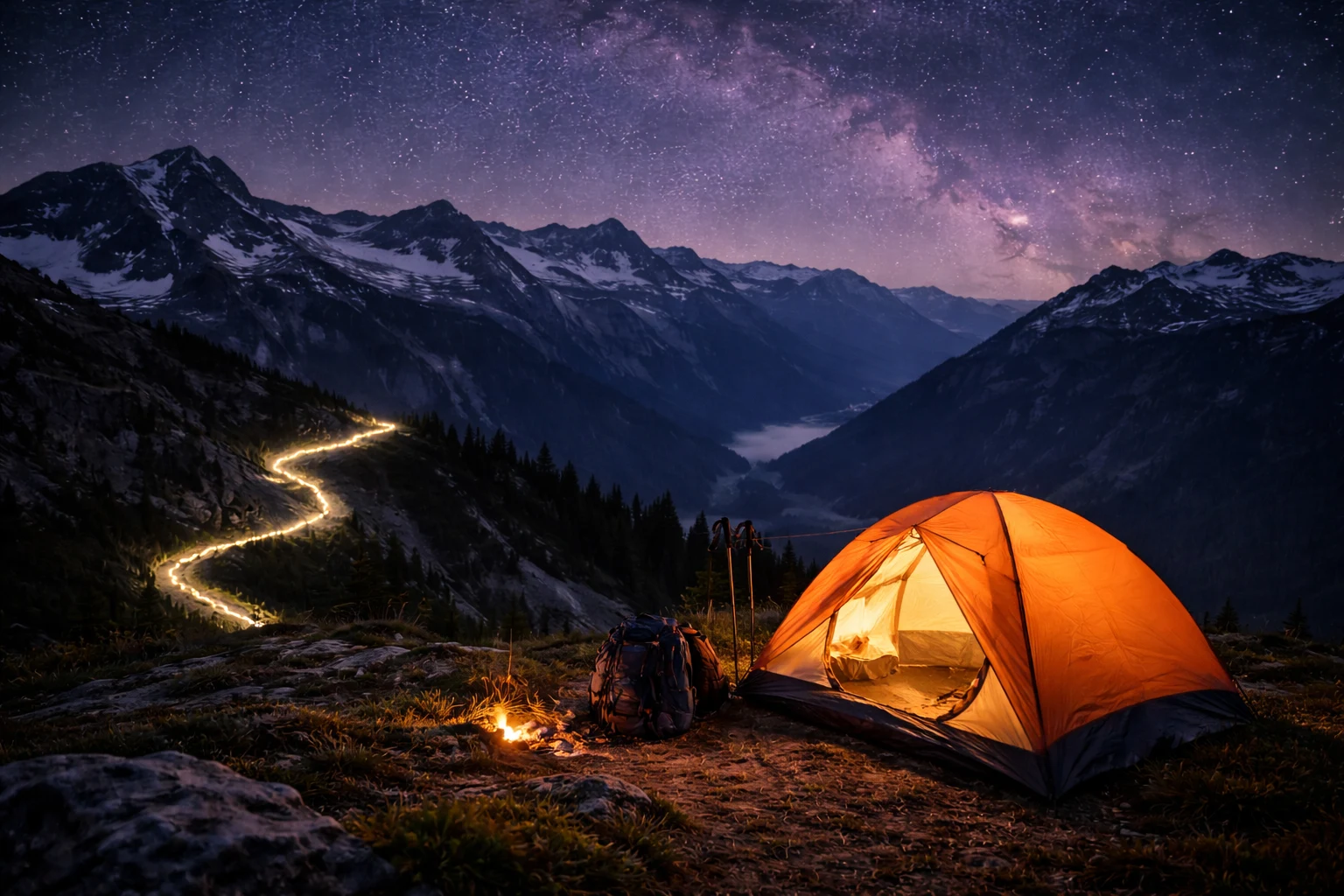
Headlamps and proper preparation are essential for night trekking.
Essential Gear for a Night Trek
Since visibility is limited at night, carrying the right gear becomes very important. A few essential items can make your night trek much safer and more comfortable.
- A reliable headlamp or flashlight with extra batteries
- Comfortable trekking shoes with strong grip
- A lightweight backpack with water and snacks
- A light jacket, as temperatures can drop during the night
- A fully charged mobile phone for emergencies
- Basic first aid supplies
Among these, a headlamp is usually the most important item. Unlike a handheld torch, a headlamp keeps your hands free and lights up the trail directly in front of you.
Safety Tips for Night Trekking
Night trekking can be exciting, but safety should always be the top priority. Following a few simple precautions can make the experience much safer.
- Always trek with a group or experienced trek leader
- Stick to well-known and clearly marked trails
- Avoid wandering away from the group
- Watch your footing carefully on rocky or steep sections
- Check weather conditions before starting the trek
- Carry enough water and stay hydrated
Because visibility is limited at night, it’s important to move slowly and stay aware of your surroundings. Maintaining a steady pace helps prevent accidents and allows everyone in the group to stay together.
The Magic of Reaching the Summit at Sunrise
One of the biggest rewards of a night trek is arriving at the summit just before sunrise. After hours of walking through the darkness, the first rays of sunlight slowly begin to appear on the horizon.
The sky gradually changes color, the mountains become visible, and the surrounding landscape wakes up with the morning light. This moment often feels incredibly peaceful and rewarding.
Many trekkers say that sunrise treks are some of the most memorable experiences in the outdoors. Watching the world brighten after a long night trek makes the entire journey feel worthwhile.
Once the sun rises and the trails become clearer, the descent usually feels much easier and more relaxed. It’s a perfect way to complete a unique adventure before the rest of the day begins.
Mototrek Tip
If you're planning your first night trek, choose a well-known trail that is popular for sunrise trekking. These routes usually have clearer paths and more trekkers around, making the experience safer and more enjoyable.