Why Packing the Right Items Matters
Preparing for a trek is not just about choosing the trail or wearing the right shoes. What you carry in your backpack plays a major role in how comfortable and safe your trekking experience will be.
A well-packed backpack ensures that you have everything necessary for hydration, energy, safety, and weather protection during the trek. At the same time, carrying too many unnecessary items can make the backpack heavy and tiring to carry.
The goal is to find the right balance between preparation and simplicity. Every item in your backpack should have a purpose and contribute to your comfort or safety on the trail.
Whether you are going on a short day trek or a longer hike, understanding what to carry in your trek backpack can make the entire journey smoother and more enjoyable.
Water and Hydration Essentials
Staying hydrated is one of the most important aspects of trekking. Walking for several hours, especially on uphill trails, can quickly lead to dehydration if you are not drinking enough water.
- Reusable water bottle or hydration bladder
- Electrolyte powder or hydration tablets
- Extra water depending on trek duration
It is a good habit to take small sips of water regularly instead of waiting until you feel very thirsty.
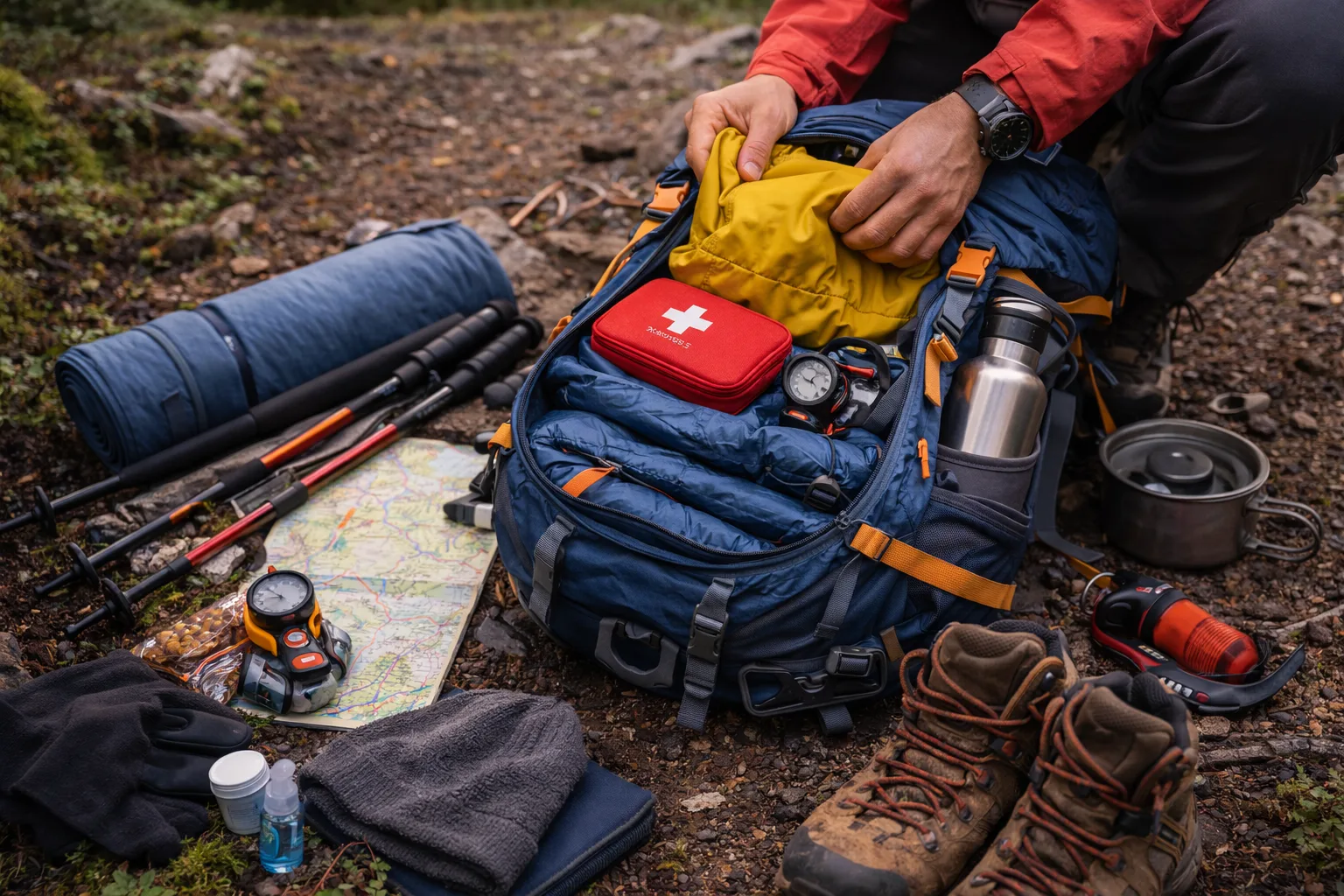
Carrying the right essentials in your backpack can make trekking safer and more comfortable.
Energy Snacks and Food
Trekking burns a lot of energy, especially during long climbs. Carrying small energy snacks helps maintain stamina throughout the trek.
Lightweight and nutritious snacks are ideal because they provide quick energy without adding too much weight to your backpack.
Common trekking snacks include:
- Energy bars or granola bars
- Dry fruits and nuts
- Bananas or other easy-to-carry fruits
- Peanut butter sandwiches
- Chocolate for quick energy
Eating small amounts of food at regular intervals helps keep your energy levels stable during the trek.
Weather Protection Gear
Weather conditions can change quickly in mountains or forest trails. Even if the weather looks clear when you start, it is always wise to carry basic protection against rain, wind, or strong sunlight.
Some useful weather protection items include:
- Lightweight rain jacket or poncho
- Cap or hat for sun protection
- Sunglasses
- Small towel or bandana
These simple items can make a big difference when weather conditions change during the trek.
Basic First Aid Kit
Even on well-maintained trails, minor injuries such as cuts, blisters, or muscle strains can happen. Carrying a small first aid kit ensures that you can handle minor issues quickly.
A simple trekking first aid kit may include:
- Bandages and adhesive plasters
- Antiseptic wipes or cream
- Pain relief tablets
- Blister patches
- Elastic bandage for sprains
A lightweight first aid kit does not take much space but can be extremely useful during emergencies.
Navigation and Safety Items
While many trekking routes are well-marked, it is always wise to carry basic navigation tools and safety items. These help you stay oriented and prepared for unexpected situations.
Useful safety items include:
- Fully charged mobile phone
- Offline maps or navigation app
- Power bank
- Whistle for emergency signaling
- Headlamp or small flashlight
These tools help ensure that you remain prepared even if the trek takes longer than expected.
Personal Essentials
In addition to safety and hydration, some personal items can make your trekking experience more comfortable.
Common personal essentials include:
- Sunscreen
- Insect repellent
- Extra pair of socks
- Hand sanitizer
- Small trash bag for waste
Carrying these items helps you stay comfortable and maintain cleanliness during the trek while also protecting the natural environment.
Pack Smart and Travel Light
While it is important to carry essential items, overpacking can make your trek unnecessarily difficult. A heavy backpack can slow you down and cause fatigue during long climbs.
Before packing, review your items carefully and prioritize only what is truly necessary for the trek.
Experienced trekkers often follow a simple rule: carry what you need, but avoid carrying what you will not use.
Packing smartly allows you to move freely and enjoy the trek without unnecessary strain.
Mototrek Tip
Before starting your trek, check your backpack weight and make sure the load feels comfortable. A well-packed, lightweight backpack helps you walk longer distances with less fatigue.